Rotavators have become one of the most commonly used implements in modern farming. They save time, reduce labor, and prepare soil quickly for sowing. For many farmers, a rotavator feels like the easiest way to get the field ready in just one or two passes.
But here’s something most people don’t talk about enough.
Using a rotavator the wrong way can actually harm your soil and reduce efficiency in the long run.
Over the years, many farmers have started relying heavily on rotavators without fully understanding how they should be used. The result? Higher fuel consumption, soil problems, and unnecessary wear on machinery.
Let’s look at some of the most common mistakes farmers make when using rotavators—and how to avoid them.
1. Using a Rotavator for Every Field Operation
One of the biggest mistakes is treating the rotavator as a one-solution tool for everything.
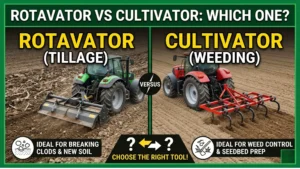
Many farmers skip other implements like ploughs or cultivators and directly use a rotavator to prepare the land.
It may seem convenient, but it isn’t always the best approach.
Rotavators are designed mainly for final seedbed preparation, not for primary soil breaking. When they are used repeatedly on unprepared soil, they tend to create a compact layer below the working depth. This layer, often called a hard pan, can restrict root growth and reduce water infiltration.
A better approach is to use proper tillage sequence:
- Plough or cultivator for primary soil breaking
- Rotavator for final soil preparation
This keeps the soil healthy and improves field performance.
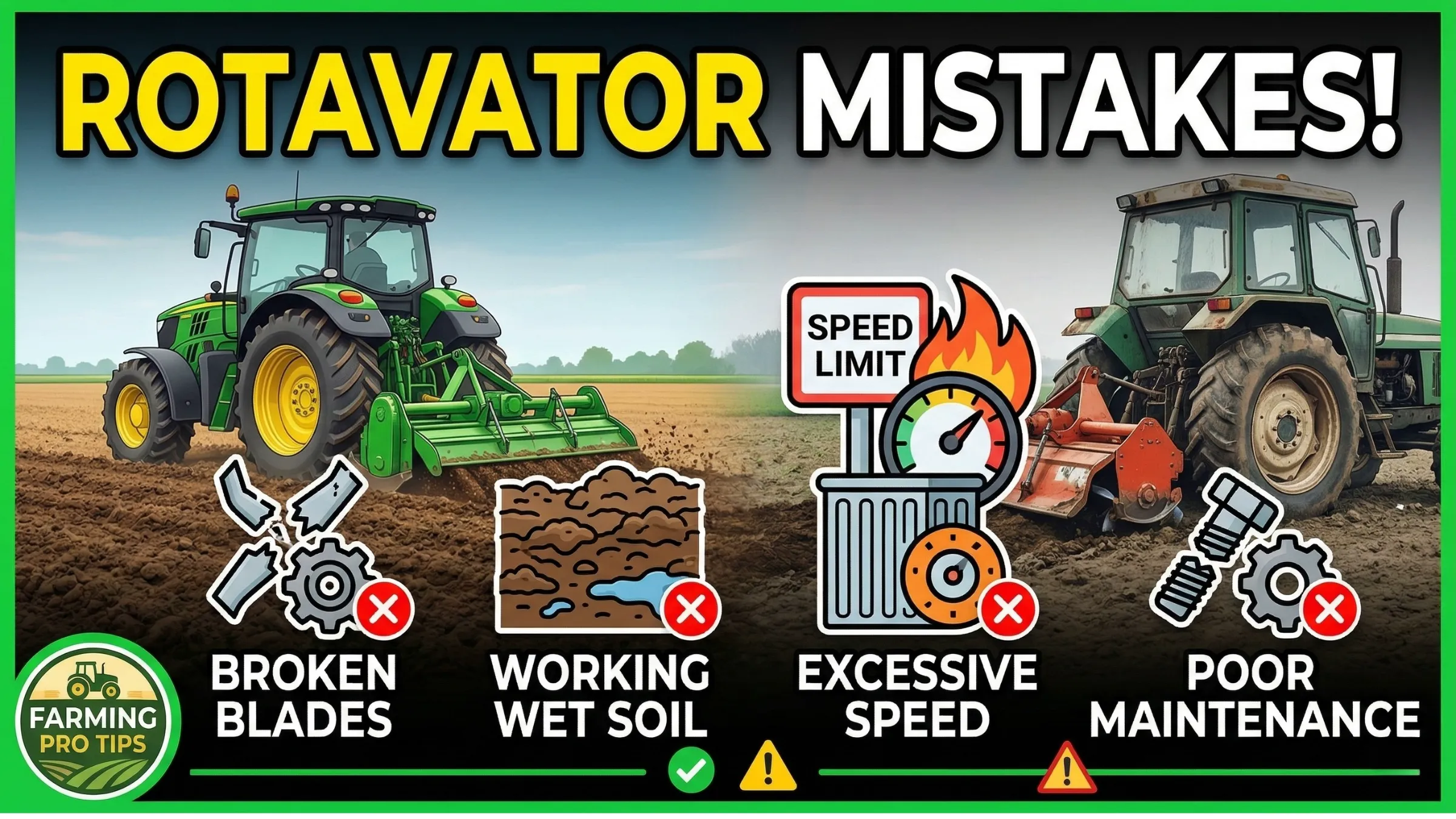
2. Running the Rotavator Too Fast
Speed might feel like productivity, but with rotavators, excessive speed often creates poor results.
When the tractor moves too fast, the blades cannot properly break and mix the soil. Instead of evenly tilled soil, you end up with uneven clods and poorly mixed residue.
High speed also increases:
- Blade wear
- Fuel consumption
- Stress on the gearbox and driveline
Operating at the recommended tractor speed and PTO settings ensures better soil texture and extends the life of the machine.
3. Working on Soil That Is Too Wet
Another common mistake is using rotavators immediately after irrigation or rainfall.
Wet soil may appear soft and easy to till, but it can actually lead to serious soil structure damage.
When rotavator blades work in wet soil, they smear the soil rather than crumble it. This creates a dense layer that becomes hard once the soil dries.
The result?
- Poor aeration
- Weak root penetration
- Reduced crop performance
The ideal condition is slightly moist soil, not overly wet soil. This allows blades to break clods properly and maintain natural soil structure.
4. Using Worn-Out Blades
Rotavator blades are the heart of the machine. Yet many farmers continue using blades even when they are severely worn out.
Worn blades cannot cut efficiently. Instead of slicing through soil, they drag through it. This reduces tillage quality and forces the tractor to consume more power.
Some signs that blades need replacement include:
- Reduced soil pulverization
- Increased fuel consumption
- Uneven soil finish
Regular inspection and timely replacement of blades keep the machine performing at its best.
5. Ignoring Proper Depth Settings
Another mistake is running the rotavator too deep or too shallow.
When operated too deep:
- Tractor load increases
- Fuel consumption rises
- Blade wear accelerates
When operated too shallow:
- Soil preparation remains incomplete
- Crop residue may not mix properly
Correct depth settings allow the machine to work efficiently while protecting both soil and machinery.
Depth should be adjusted based on:
- Soil type
- Crop residue
- Tractor power
Proper setup makes a noticeable difference in performance.
6. Overusing the Rotavator
Rotavators are powerful machines, and because they give quick results, many farmers use them repeatedly in the same field.
However, too much rotavator use can over-pulverize soil.
Soil that becomes too powdery loses its natural structure. This can lead to problems such as:
- Soil erosion
- Reduced moisture retention
- Compacted subsoil layers
Healthy soil needs a balance of structure and aeration. Using rotavators moderately, along with other implements, helps maintain that balance.
7. Lack of Regular Maintenance
Like any farm implement, rotavators require routine maintenance.
Unfortunately, maintenance is often ignored until something breaks.
Basic checks should include:
- Gearbox oil level
- Bolt tightness
- Blade condition
- PTO shaft lubrication
Regular maintenance not only prevents breakdowns but also improves overall machine efficiency.
Final Thoughts
Rotavators are incredibly useful tools in modern agriculture. When used correctly, they help farmers prepare land faster and more efficiently.
But like any machine, they need to be used with the right technique and understanding.
Avoiding common mistakes—such as overusing the machine, working on wet soil, or ignoring maintenance—can make a big difference in both soil health and machinery lifespan.
In farming, small improvements in how we use equipment can lead to better yields, lower costs, and more sustainable field practices over time.