Buying a tractor is a big investment. But the truth many farmers realize later is this: a tractor alone cannot do much without the right implement attached to it.
The real productivity of a tractor comes from the implements it works with—whether it’s a rotavator, cultivator, laser land leveller, or planter.
Yet many farmers make decisions based only on price or what others in the village are using. That often leads to poor performance, higher fuel consumption, or unnecessary stress on the tractor.
Choosing the right agricultural implement isn’t complicated, but it does require understanding a few important factors.
Let’s break it down in simple terms.
Start with Your Tractor’s Power
The first thing to consider is tractor horsepower (HP).
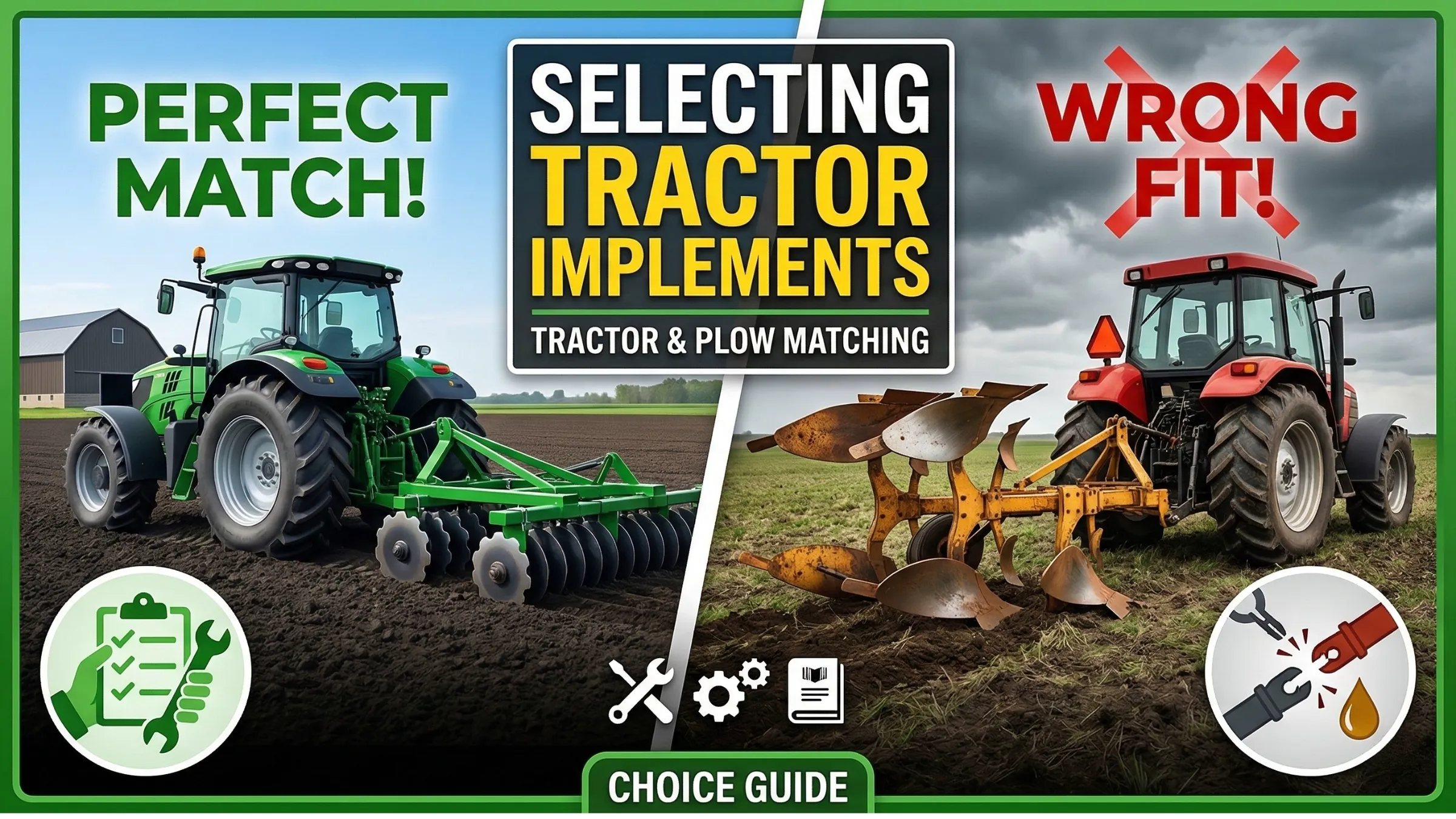
Every agricultural implement is designed to work within a certain power range. If the implement is too heavy for your tractor, the engine will struggle, fuel consumption will increase, and the machine may wear out faster.
On the other hand, if the implement is too small for the tractor, you won’t be using the tractor’s full potential.
For example:
- A smaller tractor (35–45 HP) works best with lighter implements like small cultivators or compact rotavators.
- A medium tractor (45–60 HP) can handle heavier rotavators, seeders, and some residue management implements.
- Larger tractors can operate wider and more powerful machinery.
Always check the recommended horsepower range before selecting an implement.
Understand Your Soil Type
Not all soils behave the same way. Soil type plays a big role in deciding which implement will perform best.
If your soil is heavy clay, it may require stronger implements that can break tough clods. In such cases, a cultivator or plough may be needed before using a rotavator.
If the soil is light or sandy, aggressive implements may not be necessary. Lighter equipment can prepare the field effectively while saving fuel.
Choosing machinery that matches the soil conditions helps avoid unnecessary stress on both the implement and the tractor.
Consider the Type of Farming Operation
Different farming operations require different implements.
For example:
- Land preparation may require ploughs, cultivators, or rotavators.
- Land leveling may require laser land levellers or box blades.
- Sowing and planting require seed drills or planters.
- Residue management may require straw reapers or mulchers.
Instead of buying equipment that tries to do everything, it’s better to choose implements designed for specific tasks. This ensures better efficiency and results in the field.
Check Implement Width
Another important factor is the working width of the implement.
Wider implements cover more ground in less time, which sounds great. But if the implement is too wide for the tractor’s power, it can overload the engine and reduce efficiency.
The right balance is important.
A properly matched implement allows the tractor to operate smoothly while maintaining good working speed and fuel efficiency.
Focus on Build Quality
Agricultural implements work in harsh conditions. They face rocks, soil resistance, and constant vibration.
That’s why build quality matters a lot.
Look for features such as:
- Strong frame construction
- High-quality blades or tines
- Durable gearbox and driveline components
- Reliable welding and finishing
A well-built implement may cost more initially, but it will usually last longer and perform better in the field.
Think About Maintenance and Spare Parts
Before purchasing any implement, ask a simple question:
Will I easily find spare parts and service if something breaks?
Even the best machines require maintenance over time.
If spare parts are difficult to find or service support is far away, small issues can turn into long downtime during important farming seasons.
Choosing implements from manufacturers that provide reliable support and parts availability helps avoid these problems.
Don’t Ignore Fuel Efficiency
Fuel is one of the biggest operating costs in farming.
When an implement matches the tractor properly, the machine works efficiently and consumes less fuel. But when the implement is too heavy or poorly designed, the tractor struggles and fuel costs increase.
A good implement should allow the tractor to work comfortably without excessive load.
Talk to Experienced Farmers and Experts
Finally, one of the most valuable steps is learning from experience.
Talk to farmers who are already using similar machinery. Ask them what works well and what challenges they faced.
You can also consult machinery dealers or agricultural engineers who understand equipment performance.
Real-world insights often help you make better decisions than simply relying on specifications.
Final Thoughts
Choosing the right agricultural implement for your tractor is not just about buying another machine. It’s about matching the equipment to your tractor, soil conditions, and farming operations.
When the right implement is selected, everything becomes easier—soil preparation improves, fuel consumption stays controlled, and field operations become more efficient.
In the long run, the right decision not only protects your tractor but also helps improve productivity and overall farming efficiency.