Farming is full of challenges. Anyone who has spent time working in the field knows that no two seasons are exactly the same. Soil conditions change, crop residue piles up, water distribution becomes uneven, and sometimes even the best planning runs into unexpected problems.
But here’s something many farmers have realized over time:
The right agricultural implement can solve many field problems before they even become serious issues.
Modern farming equipment isn’t just about convenience. It’s about improving efficiency, saving time, and making sure the field is properly prepared for healthy crop growth.
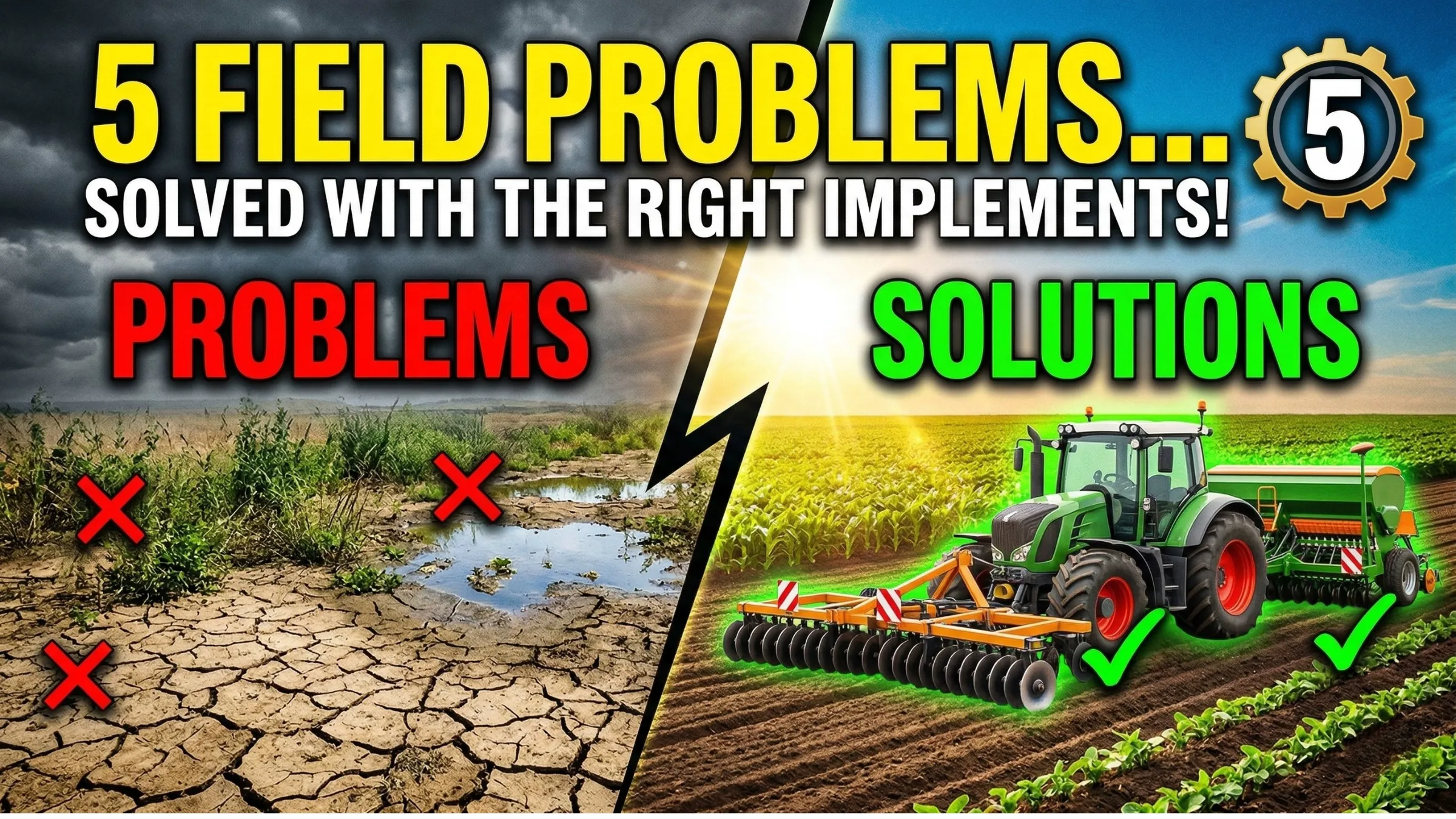
Let’s look at five common field problems and how the right implements can help solve them.
1. Uneven Land That Affects Water Distribution
One of the most common problems in farming is uneven land.
Even small variations in field level can create major issues during irrigation. Water tends to collect in low areas while higher areas remain dry. This uneven distribution affects crop growth and often leads to poor yields.
In such situations, a laser land leveller can make a big difference.
Laser levelling technology allows farmers to level their fields with high accuracy. Once the land is properly leveled, water spreads evenly across the field. This improves irrigation efficiency and reduces water wastage.
Many farmers also notice additional benefits like:
- Better germination
- Reduced irrigation time
- Lower water usage
A well-leveled field often leads to more uniform crop growth across the entire area.
2. Hard Soil That Restricts Root Growth
Over time, soil can become compacted due to repeated tractor movement, irrigation cycles, and continuous cropping.
Compacted soil creates a tough layer that roots struggle to penetrate. When roots cannot grow properly, plants have difficulty absorbing water and nutrients.
To address this problem, farmers commonly use cultivators or ploughs.
These implements break and loosen the soil, improving aeration and allowing roots to grow more freely. Proper soil loosening also improves water infiltration, which helps maintain healthy soil conditions.
Regular soil loosening is essential for maintaining long-term soil productivity.
3. Crop Residue Left After Harvest
After harvesting crops like wheat or rice, large amounts of residue often remain in the field. Managing this residue can be difficult, especially when preparing the field for the next crop.
In some regions, farmers resort to burning residue, but this practice causes environmental damage and soil degradation.
Instead, modern implements like happy seeders, straw reapers, or mulchers help manage residue effectively.
These machines allow farmers to either collect residue or incorporate it into the soil. When residue is properly managed, it can even improve soil organic matter and support healthier soil structure.
Using the right residue management implement not only solves a field problem but also contributes to more sustainable farming practices.
4. Poor Soil Preparation Before Sowing
Seed germination depends heavily on soil preparation. If the soil is full of large clods or uneven surfaces, seeds may not establish properly.
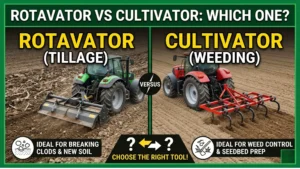
That’s where implements like rotavators come into play.
A rotavator breaks soil clods, mixes organic matter, and creates a fine seedbed that supports better seed-to-soil contact. This improves germination and helps crops establish more evenly.
However, rotavators work best when used as a final step in soil preparation, usually after primary tillage with ploughs or cultivators.
Proper soil preparation is one of the most important factors in achieving uniform crop growth and healthy plant development.
5. Weed Growth Between Crops
Weeds compete with crops for water, nutrients, and sunlight. If not controlled early, they can significantly reduce crop yield.
One effective way to manage weeds is by using cultivators designed for inter-row operations.
These implements loosen the soil between crop rows while removing weeds at the same time. This mechanical method reduces dependence on chemical herbicides and helps maintain soil health.
Regular field cultivation also improves soil aeration and moisture retention, creating better growing conditions for crops.
The Bigger Picture
Many field problems farmers face are not always caused by weather or soil conditions alone. Sometimes the real issue is using the wrong equipment or skipping important field operations.
Modern agricultural implements are designed to address specific challenges in farming. When used correctly, they help farmers:
- Save time and labor
- Improve soil health
- Increase efficiency in field operations
- Achieve better crop performance
The key is understanding which implement is needed at the right stage of farming.
Final Thoughts
Farming will always involve challenges. But with the right knowledge and the right machinery, many of those challenges become manageable.
From leveling land to managing crop residue, agricultural implements play an important role in modern farming systems.
Choosing and using the right tools doesn’t just solve immediate problems—it also helps build more productive and sustainable fields for the future.